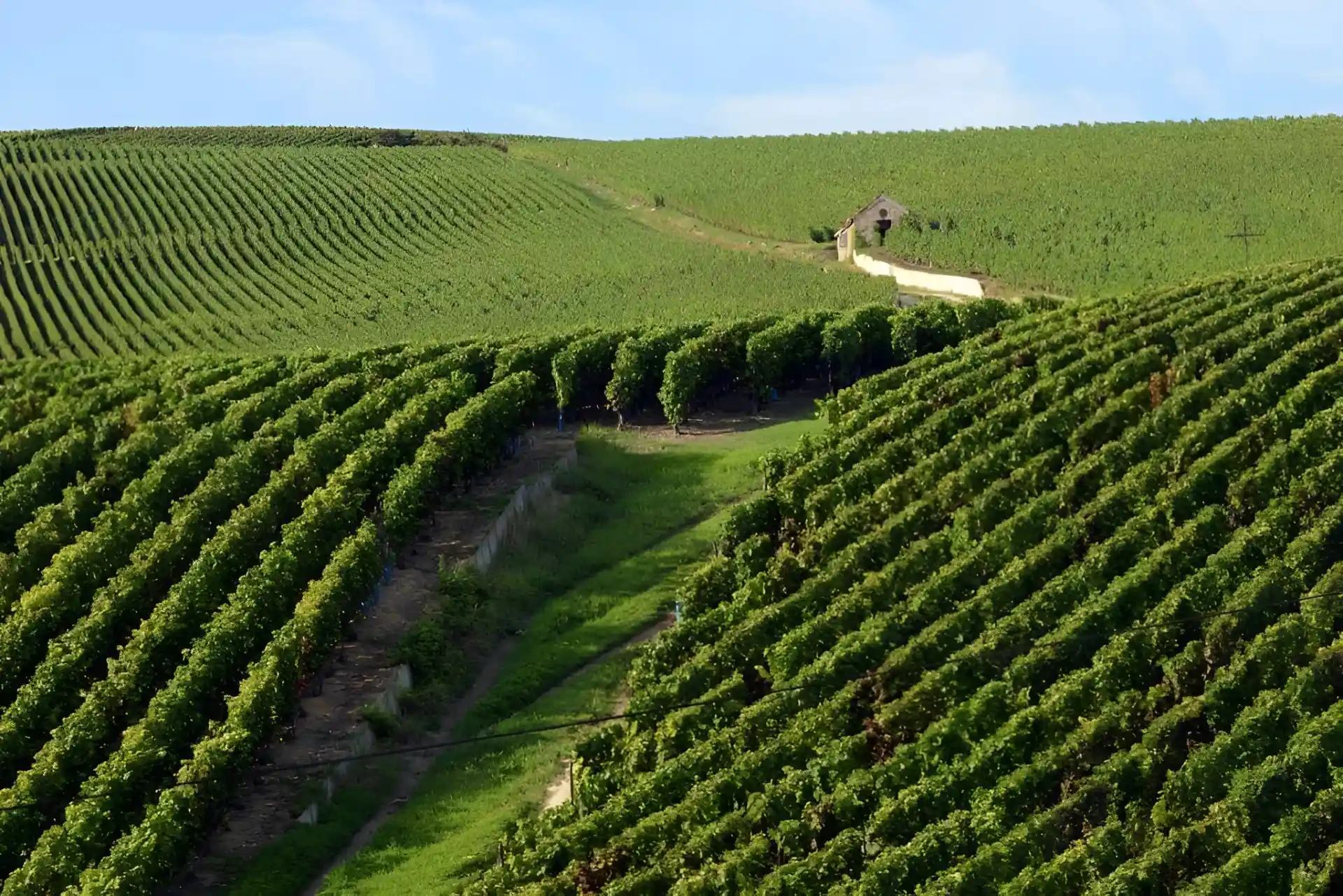
's Champagne Vineyard: An Exceptional Terroir

The Champagne wine region Champagne much more than just a geographical area; it is the birthplace of a unique tradition protected by the AOC designation. Thanks to its geological heritage and distinctive climate, each vineyard plot draws its identity from soil shaped by time. Immerse yourself in the heart of the Champagne hillsides, where the excellence of our cuvée is born.
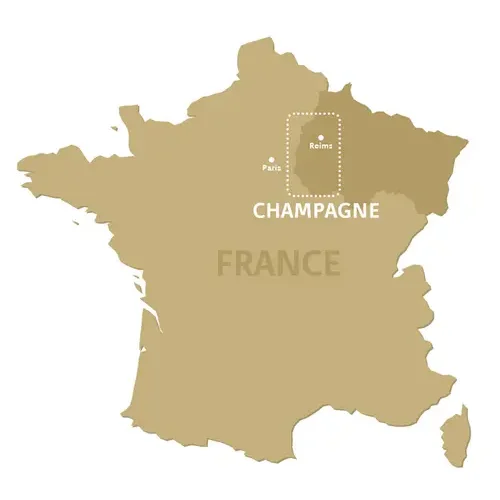
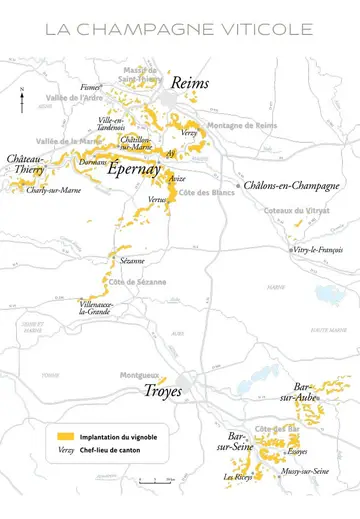
map of France showing the location of the Champagne region Champagne northeast of the country

A unique geography

The Champagne wine region Champagne approximately 34,200 hectares and offers a wide variety of wines. This mosaic of terroirs spans five French departments.

  • The Marne:
    The historic heart of the region, home to the Montagne de Reims, the Marne Valley, and the prestigious Côte des Blancs.
  • L’Aube:
    Known for the Côte des Bar and its marl soils, which lend structure and character.
  • The Aisne:
    A region of valleys that provides the grapes with a lovely freshness.
  • La Haute-Marne:
    A small, authentic extension of the vineyard that produces grapes with character, marked by minerality.
  • Seine-et-Marne:
    The western tip, characterized by a milder, more temperate climate, produces grapes with lovely structure and aromatic expression.

The climate of Champagne
: a dual influence

What makes our vineyard so special is its northern location, at the very northern limit of viticulture. It benefits from a dual climatic influence, a key factor in the finesse of our champagnes.

  • Oceanic Influence:
    It provides a steady supply of water with moderate temperature fluctuations between seasons.

  • Continental Influence:
    This climate ensures optimal sunshine in the summer, but exposes the vines to severe winter and spring frosts, forcing the vines to concentrate their aromas.

A landscape of rolling hills
: The Art of the Exhibition

The Champagne vineyards are a landscape of valleys and steep hillsides. This rugged terrain is not merely scenic.

  • Drainage:
    The slope helps rainwater run off.

  • Sun exposure:
    The slope of the hillsides allows for maximum exposure to the sun’s rays, which are essential for the ripening of the grapes.

  • The mirror effect of waterways:
    The proximity of the Marne River and its tributaries plays a crucial role. Indeed, the water reflects light onto the vineyards, allowing the grapes to ripen better on the most sun-exposed slopes.
  • World Heritage Site:
    The vineyards, houses, and cellars of Champagne listed as a UNESCO World Heritage Site since 2015.

A landscape of rolling hills
: The Art of the Exhibition

The Champagne vineyards are a landscape of valleys and steep hillsides. This rugged terrain is not merely scenic.

  • Drainage:
    The slope helps rainwater run off.

  • Sun exposure:
    The slope of the hillsides allows for maximum sunlight, which is essential for the ripening of the grapes.

  • The mirror effect of waterways:
    The proximity of the Marne River and its tributaries plays a crucial role in regulating temperature; the water reflects light onto the vineyards, thereby accelerating the ripening of the grapes on the best-exposed slopes.
  • World Heritage Site:
    The hillsides, houses, and cellars of Champagne listed as a UNESCO World Heritage Site.

The secret of the clay-limestone soil

champagne global success champagne on two pillars:its terroir and the artisans who craft this exceptional wine. On average, a bottle of champagne through the hands of 10 artisans. The vineyards are built on bedrock composed mainly of limestone and chalk.

  • Thermal regulation:
    Chalk absorbs solar heat during the day and releases it at night.

  • Natural drainage:
    It acts like a sponge, absorbing excess water while maintaining consistent moisture for the roots, even during dry summers.

  • Mineral character:
    It is this clay-limestone soil that gives theMarquis de Joncry Champagne cuvée Marquis de Joncry sought-after mineral intensity.

Grape Varieties
: The Soul of the Terroir

Chardonnay

The quintessential white grape variety, Chardonnay embodies the essence of our style. It finds its purest expression in chalky soils.

  • Aromatic profile:
    Delicate notes of white flowers, fresh citrus, and mineral accents.

  • Contribution to the wine:
    It imparts finesse and freshness and has excellent aging potential.

Pinot Noir

A red grape variety, Pinot Noir provides the structure needed to balance our blends.

  • Aromatic profile:
    Delicious aromas of red berries (raspberry, cherry) and hints of violet.

  • Contribution to the wine:
    It gives the champagne body, power, and longevity.

The Miller

Particularly delicate, Meunier (formerly known as Pinot Meunier) is the grape variety of choice for connoisseurs.

  • Aromatic profile:
    Notes of ripe fruit (apple, pear) and wildflowers.

  • Contribution to the wine:
    It adds an immediate fruitiness that makes the blend smooth and harmonious.

Sustainable viticulture

Respect for the land is not an option. For ourMarquis de Joncry Champagne , we view the vineyard as a living ecosystem of which we are the stewards. Our approach to sustainable viticulture seeks to strike a balance between environmental protection and oenological excellence. The work in the vineyard relies on the daily dedication and commitment of our team, season after season.

Grass Cover,
Promoting Soil Health

Rather than tilling the soil intensively, we prefer to use controlled grass cover between the rows of vines.

  • Combating erosion:
    The grass roots help maintain the structure of the clay-limestone soil.

  • Biodiversity:
    A living soil allows the vine roots to better absorb the nutrients necessary for the complexity of champagne.

  • Natural regulation:
    The grass creates healthy competition for water, forcing the vines to send their roots deeper into the chalk, which enhances the concentration of aromas in the grapes.


Reduction of inputs
, and integrated pest management

Preserving the flora and fauna of our vineyard requires sustainable management practices tailored to the needs of the vines.

  • Reduced herbicide use:
    We prioritize mechanical cultivation under the vines to respect the plant’s natural cycle.

  • Prevention:
    By thinning out the clusters and carefully managing the foliage, we naturally limit the occurrence of diseases, thereby reducing the need for treatments.

Certifications

Our commitment goes beyond mere words.Marquis de Joncry Champagne Marquis de Joncry to the Champagne region’s rigorous certification standards.

VDC
: Sustainable Viticulture in Champagne

A set of guidelines specific to our appellation that covers water management, waste management, and biodiversity conservation.

HVE-3
: High Environmental Value

Recognition of a farm that promotes biodiversity across its entire property.

ISO 22000
: Food Safety Management

Certification of the supply of safe food to consumers and the management of risks that threaten food safety.

To visit our website, you must be of legal age and old enough to consume alcohol in your country. Please enter your year of birth below.

Great! We've received your information.

Once you have entered your age, please use the button(s) below.

This site uses cookies (Google Analytics) for statistical purposes to improve the user experience. You are free to consent to this now or at a later time via our Cookie Policy.

By clicking "accept" or "decline," you confirm that you are of legal age and meet the age requirement to access our website. Alcohol abuse is dangerous to your health; please drink responsibly.